MUSEQUALITY: FOLK TRACES IN CLASSICAL MUSIC VIVALDI / DVOŘÁK / KODÁLY / BARTÓK
Date
Saturday 9. 5. 2026 from 6:00 pmTicket price
Concert partner
MUSEQUALITY: FOLK TRACES IN CLASSICAL MUSIC VIVALDI / DVOŘÁK / KODÁLY / BARTÓK
Programme
Rollicking gypsy music “Vojake Sheja”
Antonio Vivaldi (1678–1741): “La Follia”, Trio Sonata in D minor No. 12, Op. 1
Antonín Dvořák (1841–1904): Bagatelles, Op. 47
Henryk Wieniawski (1835–1880): Scherzo-Tarantella, Op. 16
—— intermission ——
Zoltán Kodály (1882–1967): Kállai kettős (arr. MusEquality)
Reinhold Glière (1875–1956): Tarantella, Op. 9
Tony Muréna (1915–1971): Indifférence
Béla Bartók (1881–1945): Romanian Folk Dances, Sz. 56, BB. 68
Antal Béla Babai (1914–1997): Caprice Tzigany
The concert hall at Hukvaldy Court, surrounded by landscape and history deeply connected to folk tradition and the artistic memory of the “Janáček’s region,” provides an ideal setting for MusEquality’s programme “Folk Traces in Classical Music.” What happens when Classical virtuosity meets the natural energy of folk music? Can the cimbalom stand its ground in Baroque repertoire? And what might the music sound like when returned to the world of rural traditions from which it originally emerged?
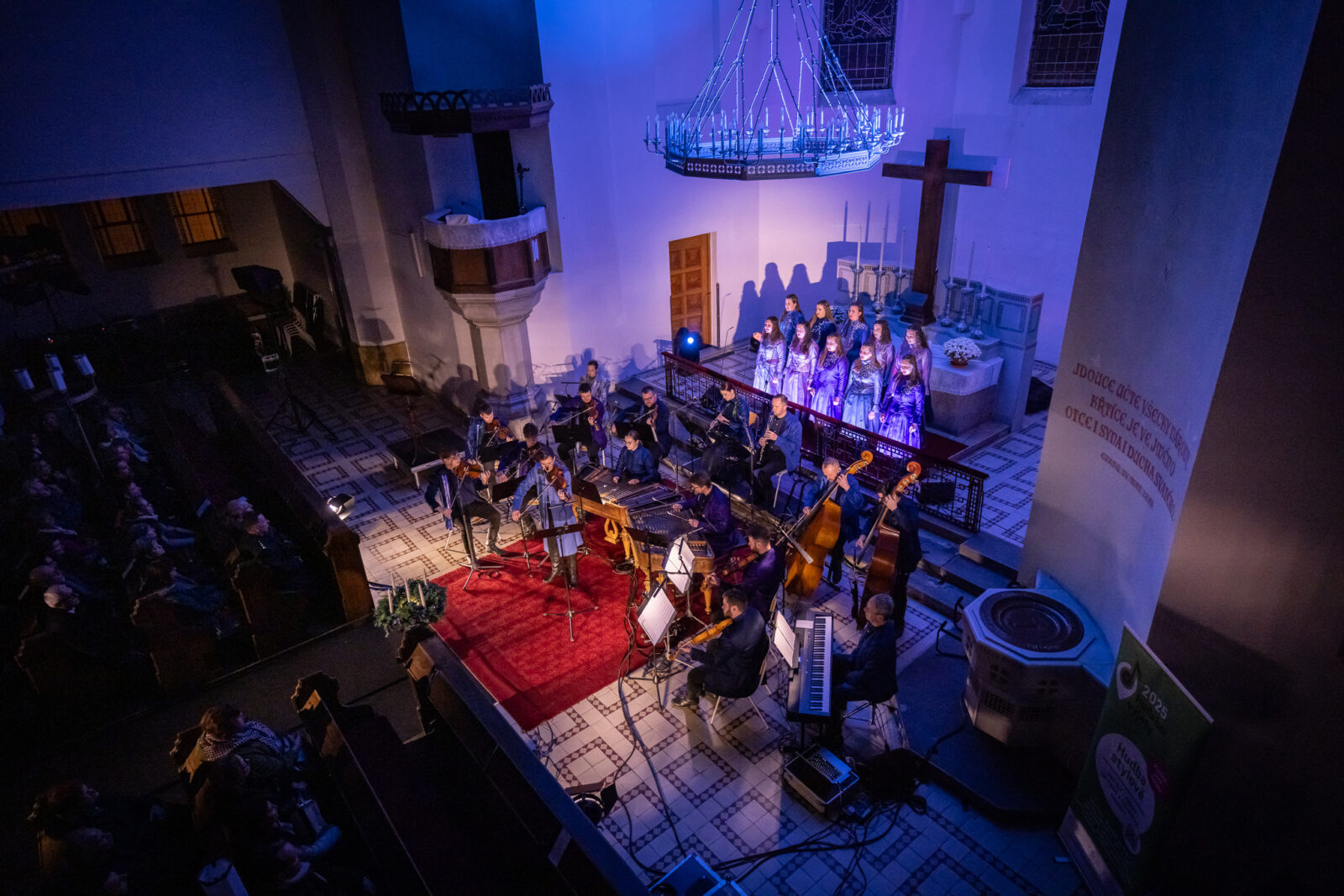
MusEquality brings classical works back to their roots — to dance, song, and rhythm. A dramaturgical journey from Vivaldi and Haydn through Dvořák, Ravel, and Bartók to Romani and Central European folk music reveals that so-called “serious” music has never been separated from the natural flow of life. The ensemble’s distinctive instrumentation — violin, accordion, cimbalom, and double bass — lends the music new colour and authenticity. The Hukvaldy concert offers a unique encounter between two worlds: classical music and folklore, in a space where music becomes a living dialogue between past and present.
MusEquality:
Viktor Janoštín – violin
Lukáš Janoštín – violin, alto
Jaromír Žižka – accordion
Michal Procházka – cimbalom
Lukáš Holubík – double-bass
Artists
You may be interested
Church of the Nativity of the Virgin Mary 5:00 pm

The Church of St. Valentine 6:00 pm
Church of St. George 5:00 pm

Frýdek Castle
Knight’s Hall 7:00 pm

Tatra Truck Museum 6:00 pm

Vila Grossmann 7:00 pm
Grand Hall of castle Kunín 6:00 pm

Frýdek Castle
Knight’s Hall 7:00 pm
Silesian Ostrava Town Hall 6:00 pm

John Hus Church 6:00 pm
Oratory of the Brethren Church 6:00 pm
St. Wenceslas Church 6:00 pm
Partners of project